What we can learn from Esperanto speakers

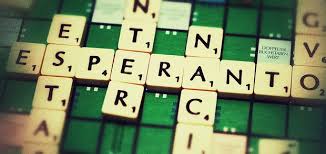
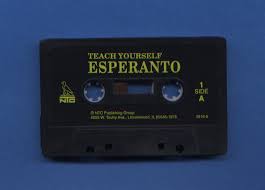
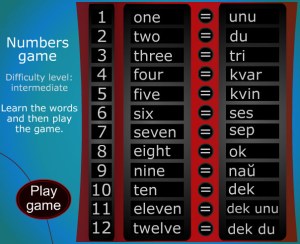
Esperanto tapeThe first language I started to learn was Esperanto, using a kit that dated back to the 1960’s. It was very interesting, this concept of a man-made language, though I did wonder who I would speak to with it. In the end I didn’t get much past 1 to 10. And porko = pig. So the problem of conversation partners didn’t arise.

I moved onto other language learning, eventually. First I had to leave country Tasmania and move to Hobart before I could take a language course in college, which in Tasmania equates to senior high school. Over the next few years I studied Italian, Spanish and Catalan and didn’t think any more of Esperanto.

Until I met Brian. A polyglot American who was hitchhiking around Europe learning languages, Brian had recently arrived in Turkey and was already speaking a bit of the language and living with a Turkish family.

Among the many lEsperanto numbersanguages Brian spoke was Esperanto. So naturally, when he arrived in Ankara he made his way to the Esperanto conversation group and struck up a conversation which resulted in Brian getting a free place to stay.
I was very impressed. I don’t think I had met an American who spoke more than two languages at that point. And for someone to learn languages just for the sake of it was impressive to me. Plus being able to talk his way into staying with a Turkish family.

Brian spoke reasonable Spanish and Italian. Probably German too. And most recently he had picked up some Polish after being given a ride by a Polish truck driver who told him his town had no English teacher. Brian was glad to help out and gave lessons in exchange for board and Polish conversation. After that he made his way to Turkey which is where I met him.

This was 1997 and, while I was keen to learn Turkish and did some study with the help of a teach-yourself Turkish book, I was putting more effort into socialising, going out and working at the Turkish Daily NewsEsperanto

I was living with my Australian best friend who was studying at university through a student exchange, and her Turkish housemate, Mine. My Turkish didn’t get past basic conversation but Mine’s English improved to the point that she later won a job with the UN.

Brian, of course, was serious about learning Turkish. Living with a Turkish family where Esperanto was the only common language pretty much forced him to learn. But he wasn’t stopping there and was also taking classes in Kurdish which was illegal at the time, and is still very difficult to do.

I lost track of Brian and his underground Kurdish classes but I am often reminded of him. He is an example of how our minds have the capacity for learning that most of us don’t bother to find. Minds can handle multiple languages without, for the most part, getting confused. He also showed me that learning languages gets easier, at least quicker, as you learn more, as long as you’re in the right environment.

Brian also had an open mind to all languages that is worth emulating. Languages are worth studying just for themselves, just for fun, just to learn. Even if you don’t have anyone around you to practice with. And sometimes you get great friendships from that, and other rewards that are impossible to predict.

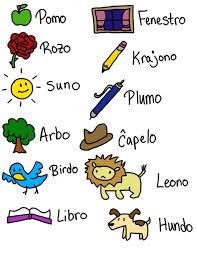
And maybe I was just a little envious I hadn’t stuck with my Esperanto kit. Who knows where I would have ended up? Esperanto animals
Twelve Days of a Bali Christmas

Here it is, Christmas again. Looking back over the year, it seems Bali has thrown up the best and worst of what this beautiful island has to offer. But from dengue to surf lessons, and from baby spitting cobras in our yard to some of the best nasi campur tasted ever, Bali still remains our true love.

Christmas in BaliTwelve Days of a Bali Christmas

by Reena Balding
Sung to the tune of The Twelve Days of Christmas.

On the first day of Christmas, my true love gave to me a mosquito that carries dengue.

On the second day of Christmas, my true love gave to me:
2  gamelans
‘n a mosquito that carries dengue.

On the third day of Christmas, my true love gave to me:
3 surfboards
2 gamelans
‘n a mosquito that carries dengue.

On the fourth day of Christmas, my true love gave to me:
4 swimming pools
3 surfboards
2 gamelans
‘n a mosquito that carries dengue.

Tropical treats for SantaOn the fifth day of Christmas, my true love gave to me:
5 COLD BINTANGS
4 swimming pools
3 surfboards.
2 gamelans
‘n a mosquito that carries dengue.

On the six day of Christmas, my true love gave to me:
6 geckos barking
5 COLD BINTANGS
4 swimming pools
3 surfboards
2 gamelans
‘n a mosquito that carries dengue.

On the seventh day of Christmas, my true love gave to me:
7 cobras spitting
6 geckos barking
5 COLD BINTANGS
4 swimming pools
3 surfboards
2 gamelans
‘n a mosquito that carries dengue.

On the eighth day of Christmas, my true love gave to me:
8 strong mojitos
7 cobras spitting
6 geckos barking
5 COLD BINTANGS
A Bali Christmas4 swimming pools
3 surfboards
2 gamelans
‘n a mosquito that carries dengue.

On the ninth day of Christmas, my true love gave to me:
9 Bali bellies
8 strong mojitos
7 cobras spitting
6 geckos barking
5 COLD BINTANGS
4 swimming pools
3 surfboards
2 gamelans
‘n a mosquito that carries dengue.

On the tenth day of Christmas, my true love gave to me:
10 Nasi campur
9 Bali bellies
8 strong mojitos
7 cobras spitting
6 geckos barking
5 COLD BINTANGS
4 swimming pools
3 surfboards
2 gamelans
‘n a mosquito that carries dengue.

On the eleventh day of Christmas, my true love gave to me:
Christmas in the tropics11 roosters crowing
10 Nasi campur
9 Bali bellies
8 strong mojitos
7 cobras spitting
6 geckos barking
5 COLD BINTANGS
4 swimming pools
3 surfboards
2 gamelans
‘n a mosquito that carries dengue.

On the twelfth day of Christmas, my true love gave to me:
12 upacaras
11 roosters crowing
10 Nasi campur
9 Bali bellies
8 strong mojitos
7 cobras spitting
6 geckos barking
5 COLD BINTANGS
4 swimming pools
3 surfboards
2 gamelans
‘n a mosquito that carries dengue.

TRANSLATION NOTE:
upacara = ceremony
Nasi Campur = mix of delicious Balinese food with rice

Aussie Indo teachers in Bali learning from their colleagues

One of the many nice things about living in Bali, and one of the more underrated, is that there are so many conferences held here that every now and again there is one that is really interesting. Last year there was a fantastic meeting of children’s writers and storytellers with writers coming from Asia and Australia. And just a few months ago, Indonesian teachers from Australia gathered in Bali for the Australian Society of Indonesian Language Educators (ASILE) conference.ASILE logo

Teachers from all over Australia came to Bali for the two-day conference on 29-30 September, many staying longer to further improve their language skills. I met teachers from South Australia, Victoria, New South Wales, ACT and Western Australia who ranged from primary school teachers, to high school all the way to university lecturers. The conference was held at IALF‘s headquarters in Denpasar, a comfortable space with enough rooms to accommodate the many parallel sessions.

Challenges ahead

The theme for the conference was Kobarkan Semangatmu: Working Together to Overcome Challenges. Some of the challenges that were discussed included declining numbers of students and schools taking Indonesian, and the end of Australian government programs that had encouraged more teachers to retrain as teachers of Indonesian.

http://www.slideshare.net/wiekegur/the-role-of-ict

I noticed one of the presentations, by Wieke Gur about ICT in teaching BIPA, is available online.

The Indonesian Curriculum for Australian schools was also discussed with the curriculum authors presenting on ‘what lies beneath and where to for teachers.’ It was an interesting presentation and a pity that it wasn’t included on the USB stick that was given in the conference pack.

Strong Indonesian presence

Among the conference attendees were many Indonesian teachers including some from Dyatmika (who presented on their literacy program) and the Green School. Many of the Indonesian-born and educated teachers seemed to have trained as English teachers first, and then switched to teaching Bahasa Indonesia bagi Penutur Asing (BIPA, meaning Indonesian for foreign learners). BIPA seems to be gaining momentum in Indonesia. Since 1999, BIPA teachers and institutions have had a professional association, APBIPA, which is working on the development of a certification program for BIPA teachers.

In fact, George Quinn, chair of the Balai Bahasa Indonesia in the ACT, declared in his opening remarks, “the centre of gravity in the teaching of Indonesian as a foreign language has shifted emphatically to Indonesia itself.” This makes it increasingly important for teachers in Australia to have good links with teachers in Indonesia, which would have been one of the aims of the conference.

Sessions were either in English or Indonesian and 18 of the 28 parallel sessions were presented by Indonesians, which demonstrates the eagerness for the Australian teachers to learn from their native speaker colleagues.

Aussie Indo teachers an interesting bunch

IALF in DenpasarThere is an interesting thing about Indonesian teachers in Australia. The majority are Australian-born whose first language is typically English. In contrast, 90 per cent of Chinese teachers in Australia are native speakers of Chinese. That is not to say that one is better than the other. What teachers may lack in accents and cultural knowledge they could make up with shared culture with their students, plus possibly having the advantage of other teaching experience in Australian schools.

I wondered, though, is this another factor as to why most Australian students currently studying Indonesian are doing so as beginners?

I was impressed with the teachers I met who had trained first in another field and later added on Indonesian. One teacher taught IT, another taught science, and both were able to relate their other area of expertise with teaching Indonesian. Learning Indonesian colours through a science experiment sounded very interesting. The IT teacher, Joyce Tabone, was also full of ideas on how to use IT, specifically iPad apps, to make learning Indonesian more fun.

The best sessions I found were the app session and one on Indonesian traditional games. Both were very useful, full of practical tips, and fun for the participants too.

On the last afternoon the Language Learning Space was launched and looks like an impressive tool to use. It includes a tutorial service for Australian schools provided by IALF.

I was sorry not to be able to join in on the trips to the Green School and STPBI, but it was a great experience to join with a group of enthusiastic teachers who loved what they did and were all eager for ideas on how to improve their teaching.